
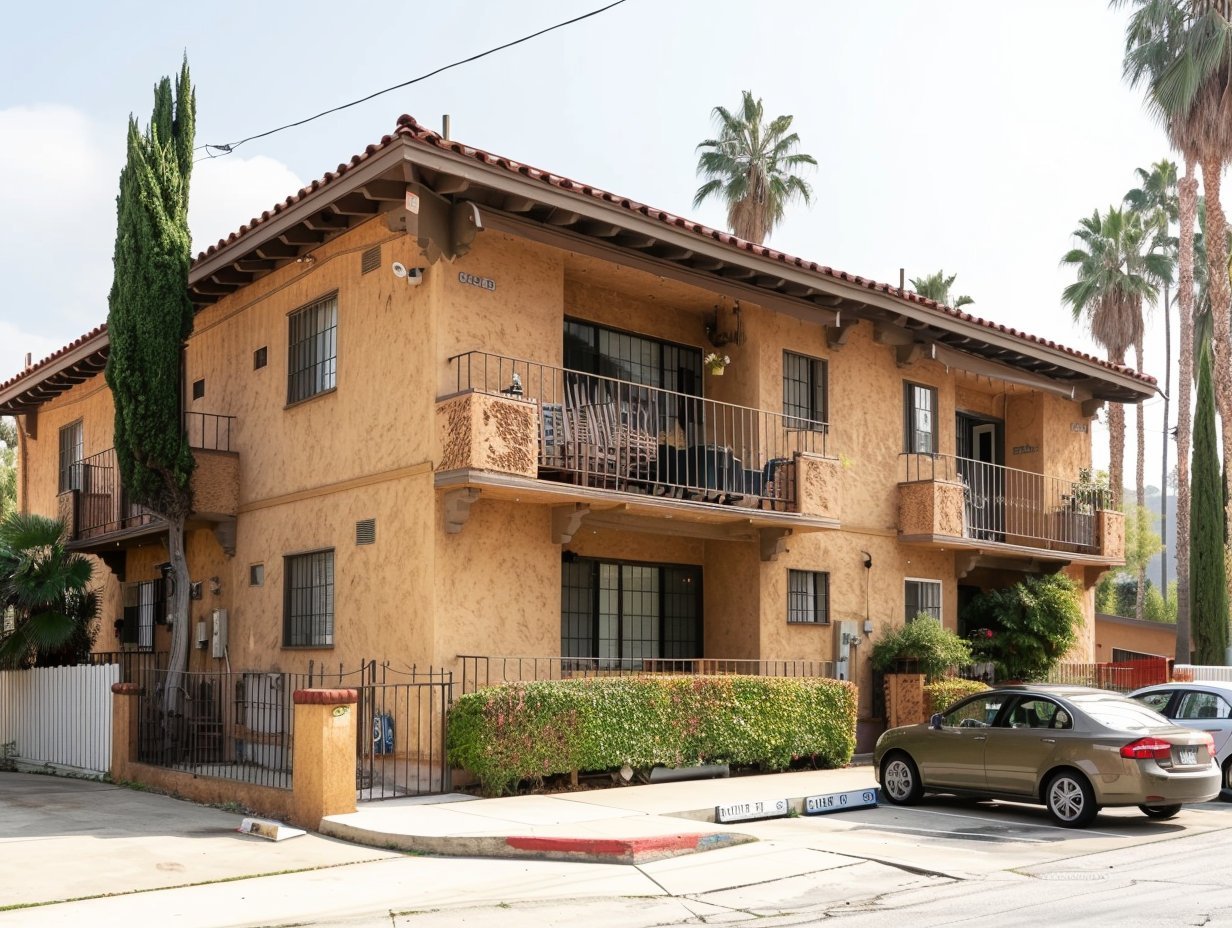
Yes — and with the right strategy, many apartment owners successfully do.
Being in the Los Angeles REAP Program doesn't mean you can't sell your apartment building. Learn how REAP affects pricing, financing, buyer demand, inspections, disclosures, and the proven strategies that help owners maximize value despite REAP status.
Schedule a ConversationNo pressure. Just a clear look at your options.
Rents may be reduced, income is disrupted, and the property is now under increased scrutiny from the Los Angeles Housing Department. Many owners feel stuck — unsure whether they should fix the issues, wait it out, or simply walk away from the problem.
The reality is, you can sell a property in REAP.
But it's not a typical transaction.
Selling during REAP requires careful positioning, proper disclosures, and a clear understanding of how the process affects value, financing, and buyer demand.
When a property enters the REAP program, it directly affects both income and perceived risk — two of the most important factors in determining value for an apartment building.
As a result, most REAP properties sell at a discount compared to similar buildings that are not dealing with violations or city involvement.
The extent of that impact depends on several key variables, including:
REAP affects both income and risk — which directly impacts value.
From a buyer's perspective, a REAP property represents both risk and opportunity.
On one hand, there is uncertainty around timelines, costs, and dealing with the Los Angeles Housing Department.
On the other, experienced investors may see an opportunity to acquire the property at a lower basis, complete the required work, and restore full rental income over time.
Because of this, pricing a property in REAP is not as simple as applying a market cap rate or comparing it to recent sales.
It requires a deeper analysis of the situation — including what it will take to correct the issues, how long that process may take, and how buyers in this niche segment are likely to respond.
In many cases, owners either overestimate what their property is worth based on past performance, or underestimate the level of discount buyers will expect given the current conditions.
Finding the right pricing strategy is critical — not just to attract interest, but to actually get a deal to the finish line.
Selling a property in REAP requires a different approach than a traditional apartment sale.
While every situation is unique, there are several key components that play a critical role in getting a REAP transaction to the finish line.
Pricing a REAP property correctly is one of the most important factors in attracting serious buyers.
This involves more than comparing recent sales. It requires understanding how buyers will evaluate the cost to cure violations, the time required to stabilize the property, and the risk involved. A well-positioned property will generate interest from experienced investors who understand these dynamics.
REAP status, violations, tenant conditions, and any interaction with the Los Angeles Housing Department must be clearly disclosed.
Attempting to minimize or hide issues will almost always create problems during escrow and can lead to delays or failed transactions. Clear, upfront communication builds trust with buyers and helps keep the process moving.
Not every buyer is equipped to take on a REAP property.
The focus should be on experienced investors who understand rent control, city processes, and value-add opportunities. These buyers are more likely to move forward despite the complexity, especially when the opportunity is presented clearly.
Financing may still be possible on a REAP property.
Being in REAP does not automatically prevent a lender from making a loan. Financing will depend on the property's physical condition, outstanding violations, and the lender's underwriting requirements.
Title insurance may also be available while the property remains in REAP. The title company will review the recorded REAP matter and may require the buyer to sign an appropriate disclosure acknowledging the property's REAP status and related obligations.
Each transaction is different, so financing and title should be investigated early rather than assuming the property must be sold for cash.
Escrow for a REAP property often involves additional coordination between the buyer, seller, title company, and the Los Angeles Housing Department.
There may be ongoing inspections, repair requirements, or documentation that needs to be addressed during the transaction. Keeping all parties aligned and proactively managing these moving parts is essential to getting the deal closed.
I recently represented the sale of 9 19th Ave in Venice, a duplex that had been in the Los Angeles REAP program for approximately six years.
The seller did not complete the entire REAP removal process before selling the property. Instead, the property was sold with the buyer fully aware of its REAP status and the remaining issues that needed to be addressed.
The buyer paid cash, so this particular transaction did not involve lender financing. However, we were able to obtain title insurance while the property was still in REAP. The buyer signed the appropriate disclosure acknowledging the property's REAP status, and the transaction successfully closed.
This is important because apartment owners sometimes assume that a property in REAP cannot be sold, cannot obtain title insurance, or must first be completely removed from the program.
That is not necessarily the case.
Lenders can also finance properties in REAP, depending on the property's physical condition, outstanding violations, and the lender's underwriting requirements. Being in REAP does not automatically mean a property must be sold to an all-cash buyer.
For an owner considering a sale, the more important question is often:
Does it make more financial sense to complete the repairs and exit REAP first—or sell the property in its current condition to a buyer prepared to take on the remaining work?

In this video, I walk through a real Los Angeles REAP sale and explain some of the issues apartment owners should consider when deciding whether to complete the REAP process or sell the property in its current condition.
Every REAP situation is different.
For some owners, it makes sense to complete repairs and work toward removing the property from the program. For others, the cost, time, and ongoing stress of dealing with violations, tenants, and city oversight can become overwhelming.
Selling may make sense if you're experiencing:
There is no one-size-fits-all answer.
The most important step is understanding your options clearly before making a decision.
If your property is in REAP — or heading in that direction — the most important step is understanding your options before making a decision.
No pressure. No assumptions. Just a clear conversation about your situation.
Schedule a ConversationOr download the SCEP & REAP Survival Guide for a deeper understanding of how these programs work.
I've worked with Los Angeles apartment owners dealing with complex situations involving LAHD, inspections, tenant issues, and properties at risk of escalating further.
In many cases, the right strategy isn't obvious — and making the wrong move can cost significant time and money.
This guide will walk you through how selling during REAP works, what to expect, and how to think about your options.